Showing posts with label Concept car. Show all posts

Wednesday, March 4, 2015

“What do you mean, I have to learn how not to drive?”

The age of autonomous driving lessons is upon us.

Paul Leroux
What would it be like to ride in an autonomous car? If you were to ask the average Joe, he would likely describe a scenario in which he sips coffee, plays video games, and spends quality time with TSN while the car whisks him to work. The average Jane would, no doubt, provide an equivalent answer. The problem with this scenario is that autonomous doesn’t mean driverless. Until autonomous vehicles become better than humans at handling every potential traffic situation, drivers will have to remain alert much or all of the time, even if their cars do 99.9% of the driving for them.

Otherwise, what happens when a car, faced with a situation it can’t handle, suddenly cedes control to the driver? Or what happens when the car fails to recognize a pedestrian on the road ahead?

Of course, it isn’t easy to maintain a high level of alertness while doing nothing in particular. It takes a certain maturity of mind, or at least a lack of ADD. Which explains why California, a leader in regulations for autonomous vehicles, imposes restrictions on who is allowed to “drive” them. Prerequisites include a near-spotless driving record and more than 10 years without a DUI conviction. Drivers must also complete an autonomous driving program, the length of which depends on the car maker or automotive supplier in question. According to a recent investigation by IEEE Spectrum, Google offers the most comprehensive program — it lasts five weeks and subjects drivers to random checks.

1950s approach to improving driver
alertness. Source:
 
Modern Mechanix blog

In effect, drivers of autonomous cars have to learn how not to drive. And, as another IEEE article suggests, they may even need a special license.

Ample warnings
Could an autonomous car mitigate the attention issue? Definitely. It could, for example, give the driver ample warning before he or she needs to take over. The forward collision alerts and other informational ADAS functions in the latest QNX technology concept car offer a hint as to how such warnings could operate. For the time being, however, it’s hard to imagine an autonomous car that could always anticipate when it needs to cede control. Until then, informational ADAS will serve as an adjunct, not a replacement, for eyes, ears, and old-fashioned attentiveness.

Nonetheless, research suggests that adaptive cruise control and other technologies that enable autonomous or semi-autonomous driving can, when compared to human drivers, do a better job of avoiding accidents and improving traffic flow. To quote my friend Andy Gryc, autonomous cars would be more “polite” to other vehicles and be better equipped to negotiate inter-vehicle space, enabling more cars to use the same length of road.

Fewer accidents, faster travel times. I could live with that.


2015 approach to improving driver alertness: instrument cluster from the QNX reference vehicle.

Thursday, February 5, 2015

Have you heard about Phantom Intelligence yet?

If you haven’t, I bet you will. Phantom Intelligence is a startup that is looking to revolutionize LiDAR for automotive. I hadn’t heard of them either until QNX and Phantom Intelligence found themselves involved in a university project in 2014. They had some cool technology and are just all-around good guys, so we started to explore how we could work together at CES 2015. One thing led to another and their technology was ultimately featured in both the QNX reference vehicle and the new QNX technology concept car.

I knew little about LiDAR at the beginning of the partnership. But as I started to ramp up my knowledge I learned that LiDAR can provide valuable sensor input into ADAS systems. Problem is, LiDAR solutions are big, expensive, and have not, for the most part, provided the kind of sensitivity and performance that automakers look for.

Phantom Intelligence is looking to change all this with small, cost-effective LiDAR systems that can detect not just metal, but also people (handy if you are crossing the street and left your Tin Man costume at home) and that are impervious to inclement weather. As a frequent pedestrian this is all music to my ears.

I am still in no way qualified to offer an intelligent opinion on the pros and cons of competing LiDAR technology so I’m just going on the positive feedback I heard from customers and other suppliers into the ADAS space at CES. Phantom turned out to be one of the surprise hits this year and they are just getting started. That’s why I think you will be hear more about them soon.


Both QNX vehicles showcased at CES 2015 use a LiDAR system from Phantom Intelligence to detect obstacles on the road ahead.

Tuesday, January 20, 2015

Driving simulators at CES

CES was just 15 minutes from closing when I managed to slip away from the very busy QNX booth to try out an F1 simulator. Three screens, 6 degrees of freedom, and surround sound came together for the most exciting simulated driving experience I have ever had. I was literally shaking when they dragged me out of the driver’s seat (I didn’t want to stop :-). Mind you, at around $80K for the system, it seems unlikely I will ever own one.

The experience got me thinking about the types of vehicles currently in simulation or in the lab that I fully expect to drive in my lifetime: cars that are virtually impossible to crash, cars that make it painless to travel long distances, and, ultimately, cars that worry about traffic jams so I can read a book.

Re-incarnated: The QNX reference
vehicle.
QNX Software Systems had a very popular simulator of its own at CES this year. You may have seen some details on it already but to recap, it is a new incarnation of our trusty QNX reference vehicle, extended to demonstrate ADAS capabilities. We parked it in front of a 12 foot display and used video footage captured on California’s fabled Highway 1 to provide the closest thing to real-world driving we could create.

The resulting virtual drive showcased the capabilities not only of QNX technology, but of our ecosystem as well. Using the video footage, we provided camera inputs to Itseez’ computer vision algorithms to demonstrate a working example of lane departure warning and traffic sign recognition. By capturing GPS data synchronized with the video footage, and feeding the result through Elektrobit’s Electronic Horizon Solution, we were able to generate curve speed warnings. All this was running on automotive-grade Jacinto 6 silicon from Texas Instruments. LiDAR technology from Phantom Intelligence rounded out the offering by providing collision feedback to the driver.

The lane departure and curve speed warnings in action. Screen-grab from video by Embedded Computing Design.

Meeting the challenge
While at CES, I also had the opportunity to meet with companies that are working to make advanced ADAS systems commercially viable. Phantom Intelligence is one example but I was also introduced to companies that can provide thermal imaging systems and near-infrared cameras at a fraction of what these technologies cost today.

These are all examples of how the industry is rising up to meet the challenge of safer, more autonomous vehicles at a price point that allows for widespread adoption in the foreseeable future. Amazing stuff, really — we are finally entering the era of the Jetsons.

By the way, I can’t remember what booth I was in when I drove the simulator. But I’m willing to bet that the people who experienced the Jeep at CES will remember they were in the QNX booth, seeing technology from QNX and its key partners in this exciting new world.

Tuesday, January 13, 2015

Tom’s Guide taps QNX concept car with CES 2015 award

Have you ever checked out a product review on Tom’s Guide? If so, you’re not alone. Every month, this website attracts more than 2.5 million unique visitors — that’s equivalent to the population of Toronto, the largest city in Canada.

The folks at Tom’s Guide test and review everything from drones to 3D printers. They love technology. So perhaps it’s no surprise that they took a shine to the QNX technology concept car. In fact, they liked it so much, they awarded it the Tom’s Guide CES 2015 Award, in the car tech category.

To quote Sam Rutherford of Tom’s Guide, “After my time with QNX’s platform, I was left with the impression there’s finally a company that just “gets it” when it comes to the technology in cars. The company has learned from the success of modern mobile devices and brought that knowledge to the auto world…”.

I think I like this Sam guy.

Engadget was also impressed...
A forward-looking approach to seeing
behind you.
The Tom’s Guide award is the second honor QNX picked up at CES. We were also shortlisted for an Engadget Best of CES award, for the digital rear- and side-view mirrors on the QNX technology concept car.

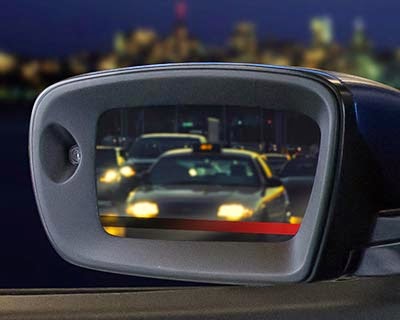
If you haven’t seen the mirrors in action, they offer a complete view of the scene behind and to the sides of the vehicle — goodbye to the blind spots associated with conventional reflective mirrors. Better yet, the side-view digital mirrors have the smarts to detect cars, bicycles, and other objects, and they will display an alert if an object is too close when the driver signals a lane change.

In addition to the digital mirrors, the QNX technology concept car integrates several other ADAS features, including speed recommendations, forward-collision warnings, and intelligent parking assist. Learn more here.

Thursday, January 8, 2015

A behind the scenes look at creating an integrated driving experience

Lynn Gayowski
Lynn Gayowski
To quote the timeless lyrics of Britney Spears, “You want a Maserati? You better work.” This is exactly what the QNX team did to get our 2015 technology concept car ready for this year’s CES. And we had the cameras rolling throughout the build process.

The video below not only gives a behind the scenes look at the making of our latest technology concept car based on a Maserati Quattroporte GTS, but it features team members talking about the technology behind the car and what QNX brings to the table (or garage in this case) to enable a customized car in mere months.

Yes, the QNX CAR Platform has cool features and amazing reliability. But another draw for our customers is the platform’s pre-integrated partner technologies. The platform gets silicon, apps, and services working together so OEMs don’t have to solve this problem for themselves. It makes development time shorter and helps the focus to stay on branding the user experience. As Alex — one of the software engineers interviewed — mentions, after seeing what we did in the Maserati, “Just imagine what our customers can do!”

We targeted an integrated driving experience for this vehicle and I think this focus is evident in the finished product. The user interface and ADAS features are intuitive, and let’s be real, gorgeous. Check out this video that summarizes the making of the 2015 QNX technology concept car:


You’ll see many members of the concept team working hard throughout this video, but a shout out as well to all of the developers who contributed to the QNX CAR Platform, QNX operating system, and acoustics technologies that made this amazing vehicle possible. Congratulations to all of you for a job well done!

Wednesday, January 7, 2015

Finalist for Engadget Best of CES Awards 2015

By Lynn Gayowski

*Fist pump!* The accolades from CES just keep coming. I'm excited to share the news that the digital mirrors implemented in our 2015 QNX technology concept car have been selected by Engadget as a finalist for their Best of CES Awards 2015, in the Best Automotive Technology category!

With advanced driver assistance systems (ADAS) influential in the design of this year's QNX vehicle, replacing the mirrors on the Maserati with digital screens to warn of possible collisions and enhance visibility for the driver was a natural choice.

Not only do the side-view screens eliminate blind spots, they also give a red warning overlay if an obstacle is in the way when making a lane change. If the coast is clear, the overlay is green.

The rear-view display is a wide-angle view behind the car that provides the driver with an expanded picture that's larger than what you'd see with a typical mirror.

Powered by the reliable QNX OS, these digital mirrors could be a feature that helps drivers of the future avoid accidents.

The rear- and side-view video displays in the 2015 QNX technology concept car based on a Maserati Quattroporte GTS offer a complete view behind and to the sides of the vehicle, eliminating blind spots.

If you're attending CES, check out the digital mirrors and the many other ADAS and infotainment demos in the QNX booth: North Hall, Booth 2231.


Now with ADAS: The revamped QNX reference vehicle

Tina Jeffrey
Since 2012, our Jeep has showcased what QNX technology can do out of the box. We decided it was time to up the ante...

I walked into the QNX garage a few weeks ago and did a double take. The QNX reference vehicle, a modified Jeep Wrangler, had undergone a major overhaul both inside and out — and just in time for 2015 CES.

Before I get into the how and why of the Jeep’s metamorphosis, here’s a glimpse of its newly refreshed exterior. Orange is the new gray!


The Jeep debuted in June 2012 at Telematics Detroit. Its purpose: to show how customers can use off-the-shelf QNX products, like the QNX CAR Platform for Infotainment and QNX OS, to build a wide range of custom infotainment systems and instrument clusters, using a single code base.

From day one, the Jeep has been a real workhorse, making appearances at numerous events to showcase the latest HMI, navigation, speech recognition, multimedia, and handsfree acoustics technologies, not to mention embedded apps for parking, internet radio streaming, weather, and smartphone connectivity. The Jeep has performed dependably time and time again, and now, in an era where automotive safety is top of mind, we’ve decided to up the ante and add leading-edge ADAS technology built on the QNX OS.

After all, what sets the QNX OS apart is its proven track record in safety-certified systems across market segments — industrial, medical, and automotive. In fact, the QNX OS for Automotive Safety is certified to the highest level of automotive functional safety: ISO 26262, ASIL D. Using a pre-certified OS component is key to the overall integrity of an automotive system and makes system certification much easier.

The ultimate (virtual) driving experience
How better to showcase ADAS in the Jeep, than by a virtual drive? At CES, a 12-foot video screen in front of the Jeep plays a pre-recorded driving scene, while the onboard ADAS system analyzes the scene to detect lane markers, speed signs, and preceding vehicles, and to warn of unintentional lane departures, excessive speed, and imminent crashes with vehicles on the road ahead. Onboard computer vision algorithms from Itseez process the image frames in real time to perform these functions simultaneously.

Here’s a scene from the virtual drive, in which the ADAS system is tracking lane markings and has detected a speed-limit sign:


If the vehicle begins to drift outside a lane, the steering wheel provides haptic feedback and the cluster displays a warning:


The ADAS system includes EB Assist eHorizon, which uses map data with curve-speed information to provide warnings and recommendations, such as reducing your speed to navigate an upcoming curve:


The Jeep also has a LiDAR system from Phantom Intelligence (formerly Aerostar) to detect obstacles on the road ahead. The cluster displays warnings from this system, as well as warnings from the vision-based collision-detection feature. For example:


POSTSCRIPT:
Here’s a short video of the virtual drive, taken at CES by Brandon Lewis of Embedded Computing Design, in which you can see curve-speed warnings and lane-departure warnings:


Fast-boot camera
Rounding out the ADAS features is a rear-view camera demo that can cold boot in 0.8 seconds on a Texas Instruments Jacinto 6 processor. As you may recall, NHTSA has mandated that, by May 2018, most new vehicles must have rear-view technology that can display a 10-by-20 foot area directly behind the vehicle; moreover, the display must appear no more than 2 seconds after the driver throws the vehicle into reverse. Backup camera and other fastboot requirements such as time-to-last-mode audio, time-to-HMI visible, and time-to-fully-responsive HMI are critically important to automakers. Be sure to check out the demo — but don’t blink or you’ll miss it!

Full-featured infotainment
The head unit includes a full-featured infotainment system based on the QNX CAR Platform for Infotainment and provides information such as weather, current song, and turn-by-turn directions to the instrument cluster, where they’re easier for the driver to see.


Infotainment features include:

Qt-based HMI — Can integrate other HMI technologies, including EB Guide and Crank Storyboard.

Natural language processing (NLP) — Uses Nuance’s Vocon Hybrid solution in concert with the QNX NLP technology for natural interaction with infotainment functions. For instance, if you ask “Will I need a jacket later today?”, the Weather Network app will launch and provide the forecast.

EB street director — Provides embedded navigation with a 3D map engine; the map is synched up with the virtual drive during the demo.

QNX CAR Platform multimedia engine — An automotive-hardened solution that can handle:
  • audio management for seamless transitions between all audio sources
  • media detection and browsing of connected devices
  • background synching of music for instant media playback — without the need for the synch to be completed

Support for all smartphone connectivity options — DLNA, MTP, MirrorLink, Bluetooth, USB, Wi-Fi, etc.

On-board application framework — Supports Qt, HTML5, APK (for Android apps), and native OpenGL ES apps. Apps include iHeart, Parkopedia, Pandora, Slacker, and Weather Network, as well as a Settings app for phone pairing, over-the-air software updates, and Wi-Fi hotspot setup.

So if you’re in the North Hall at CES this week, be sure to take a virtual ride in the QNX reference vehicle in Booth 2231. Beneath the fresh paint job, it’s the same workhorse it has always been, but now with new ADAS tech automakers are thirsting for.

Monday, January 5, 2015

QNX and Qualcomm Technologies give show goers another stunner at 2015 CES

Guest post By Nilesh Parekh, Director of Product Management at Qualcomm Technologies

Year after year, CES attendees are repeatedly amazed by the advances in automobile infotainment. Not so long ago, it was about having a great stereo in the car and maybe a tiny screen in the center stack with a primitive navigation system. Then came Bluetooth connectivity… multiple multimedia screens… front and rear displays… gaming… 3G and 4G connectivity… Wi-Fi hotspots…

This year, QNX Software Systems and Qualcomm Technologies are bringing you something really special — a “mashup,” you could say, of a Maserati Quattroporte GTS, the QNX OS, the QNX CAR Platform, and the Snapdragon™ Automotive Solutions (SAS) platform, all working together in a show-stopping technology concept car.


The QNX concept team worked closely with Qualcomm Technologies to create an immersive in-vehicle experience using advanced technologies for infotainment, digital instrument clusters, and driver assistance systems. These systems feature high-resolution UIs with multi-touch support, 3D graphics for navigation, and LiDAR-based obstacle detection. And note the side mirrors have been swapped for smart displays that eliminate typical vehicle blind spots and present relevant color-coded overlay information to promote safer driving.

Inner beauty
Admittedly, the car is a thing of beauty. But being in the tech field, I find the real beauty inside the car — deep inside. There, working hand-in-hand with the field-proven QNX OS, is the Snapdragon Automotive Solutions (SAS) platform. The SAS platform manages all infotainment features; it also processes vital vehicle safety information, collected via a myriad of camera, ultrasonic, and LIDAR sensors, and delivers all relevant information to the driver in real time — that’s a lot of computing and processing power.

What’s so special about the SAS platform? First, let me define what it is (put on your tech hats): a highly integrated, thermal-efficient automotive-grade platform that incorporates an optimized combination of CPU, GPU, 4G LTE modem, GPS/GNSS, Bluetooth, and Wi-Fi. What’s special is that it is engineered to not only enhance the driver and passenger experiences with the infotainment features we know today, but it future-proofs the vehicle for next-generation features — some of which haven’t even been dreamt of yet. More important, it allows automakers and tier ones to accelerate development schedules and to focus on creating feature-rich, reliable infotainment and safety systems built with solutions such as the QNX CAR Platform.

Let’s take a closer look at the three areas of this special technology concept car where I think the presence of SAS makes the biggest impact: the instrument cluster, the infotainment system, and the driver assistance system. And keep in mind that this vehicle is more than a showcase of what’s “out there” and possible — it’s a test bed we’ll use to gain relevant experience and knowledge that we can apply to future technologies in real cars.

The all-digital, reconfigurable instrument cluster
The cluster — the go-to information display for drivers — on the technology concept car can cycle through a number of views, providing the driver with relevant data on what’s going on, in, and around the car in real time. Rear-view park assist, current audio track, navigation data, forward-collision warnings, and vehicle data are all examples of information rendered in the cluster:


The infotainment system
You can’t help but notice the 12” portrait touchscreen next to the instrument cluster. The system is built using the QNX CAR Platform for Infotainment — an automotive-hardened software platform built on the QNX OS. The QNX CAR Platform runs on the SAS hardware and implements a sophisticated UI design that supports voice recognition, touch (including tap, swipe, and pinch and zoom on the map), and synchronizes with the rear-seat control system, allowing rear-seat passengers to manage navigation, song selection, and temperature settings.

Here's a photo of the touchscreen in action. As you can see, it's displaying map info, an incoming call, and a "Now Playing" section. If you simply tap the map, which is powered by Elektrobit (EB) street director navigation and works with EB electronic horizon, it will automatically take over two-thirds of the screen:


Driver assistance system
The car's driver assistance system makes use of LIDAR and ultrasonic sensors to detect the presence of obstacles around the vehicle and renders warning information to the driver through the cluster or side-view displays, and also through an obstacle awareness system made up of dashboard LEDs. This system projects color-coded warnings onto the windshield to indicate the location and proximity of the object.

Other highlights include:
  • “Always On” rear-view display — The rear-view mirror has been converted into a display that renders a wide-angle perspective of the area behind the car
  • Elektrobit electronic horizon — Topographical map data is used to provide curve-speed recommendations and warnings that are displayed in the cluster

If you have the opportunity to see this car at CES, I highly recommend it — it really is an amazing technology concept vehicle that showcases the next-generation of automobile infotainment and safety. It will be located in the Qualcomm booth located in Central Plaza #21A Jan 6-9. If you cannot make it to CES, you can learn more here.

To infotainment... and beyond! First look at new QNX technology concept car

The new car delivers everything you’d expect in a concept vehicle from QNX. But the real buzz can be summarized in a four-letter word: ADAS

The technology in today's cars is light-years ahead of the technology in cars 10 or 20 years ago. The humans driving those cars, however, have changed little in the intervening years. They still need to focus on a host of mundane driving tasks, from checking blind spots and monitoring road signs to staying within the lane and squeezing into parking spaces. In fact, with all the technology now in the car, including a variety of brought-in devices, some drivers suffer from information overload and perform worse, instead of better, at these crucial tasks.

Advanced driver assistance systems, or ADAS, can go a long way to offset this problem. They come in a variety of shapes and sizes — from drowsiness monitoring to autonomous emergency braking — but most share a common goal: to help the driver avoid accidents.

Which brings us to the new QNX technology concept car. As you’d expect, it includes all the advanced infotainment features, including smartphone connectivity and rich app support, offered by the QNX CAR Platform for Infotainment. But it also integrates an array of additional technologies — including cameras, LiDAR, ultrasonic sensors, and specialized navigation software — to deliver ADAS capabilities that simplify driving tasks, warn of possible collisions, and enhance overall driver awareness.

Mind you, the ADAS features shouldn’t come as any more of a surprise than the infotainment features. After all, QNX Software Systems also offers the QNX OS for Automotive Safety, a solution based on decades of experience in safety-critical systems and certified to ISO 26262, Automotive Safety Integrity Level D — the highest level achievable.

Okay, enough blather. Time to check out the car!

The “I want that” car
If the trident hasn’t already tipped you off, the new technology concept car is based on a Maserati QuattroPorte GTS. I won’t say much about the car itself, except I want one. Did I say want? Sorry, I meant lust. Because omigosh:


The differentiated dash
Before we run through the car’s many features, let’s stop for a minute and savor the elegant design of its QNX-powered digital instrument cluster and infotainment system. To be honest, I have an ulterior motive for sharing this image: if you compare the systems shown here to those of previous QNX technology concept cars (here, here, and here), you’ll see that they each project a distinct look-and-feel. Automakers need to differentiate themselves, and, as a group, these cars illustrate how the flexibility of the QNX platform enables unique, branded user experiences:


The multi-talented digital instrument cluster
Okay, let’s get behind the wheel and test out the digital cluster. Designed to heighten driver awareness, the cluster can show the current speed limit, display an alert if you exceed the limit, and even recommend an appropriate speed for upcoming curves. Better yet, it can display turn-by-turn directions provided by the car’s infotainment system.

Normally, the cluster displays the speed limit in a white circle. But in this image, the cluster displays it in red, along with a red bar to show how much you are over the limit — a gentle reminder to ease off the gas:


Using LiDAR input, the cluster can also warn of obstacles on the road ahead:


And if that’s not enough, the cluster provides intelligent parking assist to help you back into tight spaces. Here, for example, is an impromptu image we took in the QNX garage. The blue-and-yellow guidelines represent the car’s reverse trajectory, and the warning on right says that you are about to run over an esteemed member of the QNX concept team!


The rear- and side-view mirrors that aren’t really mirrors
By their very nature, car mirrors have blind spots. To address this problem, the QNX concept team has transformed the car’s rear- and side-view mirrors into video displays that offer a complete view of the scene behind and to the sides of the vehicle. As you can see in this image, the side-view displays can also display a red overlay to warn of cars, bikes, people, or anything else approaching the car’s blind zones:


The ADAS display for enhancing obstacle awareness
I don’t have pictures yet, but the car also includes an innovative LED-based display lets you gauge the direction and proximity of objects to the front, rear, and sides of the vehicle — without having to take your eyes off the road. Stretching the width of the dash, the display integrates input from the car’s ultrasonic and LiDAR sensors to provide a centralized view of ADAS warnings.

The easy-to-use infotainment system
To demonstrate the capabilities of the QNX CAR™ Platform for Infotainment, we’ve outfitted the car with a feature-rich, yet intuitive, multimedia head unit. For instance, see the radio tuner in the following image? That’s no ordinary tuner. To change channels, you can just swipe across the display; if your swipe isn’t perfectly accurate, the radio will automatically zero in on the nearest station or preset.

Better yet, the radio offers “iHeart drive anywhere radio.” If you drive out of range of your favorite AM/FM radio station, the system will detect the problem and automatically switch to the corresponding digital iHeartRadio station. How cool is that?


Other infotainment features include:
  • Natural voice recognition — For instance, if you say “It’s way too cold in here,” the HVAC system will respond by raising the heat.
  • Integration with a wide variety of popular smartphones.
  • Support for multiple concurrent app environments, along with a variety of Android and HTML5 apps, as well as an HMI built with the Qt framework.
  • A backseat display that lets passengers control HVAC functions, navigation, song selection, and other infotainment features.

The oh-so-awesome partners
The car is a testament not only to QNX technology, but to the ecosystem of technology partners that provide complementary solutions for QNX customers. Peek under the hood, and you'll find the latest tech from Elektrobit, iHeart, Nuance, Pandora, Parkopedia, Phantom Intelligence, Qualcomm, RealVNC, Rightware, and TE Connectivity.

The other stuff
Do not, for one minute, think that the Maserati is the only attraction in the QNX booth. Far from it. We will also showcase a significantly revamped QNX reference vehicle, outfitted with lane departure warnings, traffic sign recognition, and other ADAS features, as well as the latest version of the QNX CAR Platform — more in an upcoming post.

Visitors to the booth will also have the opportunity to experience:
  • a 3D navigation solution from Aisin AW
  • a digital instrument cluster designed by HI Corporation
  • two QNX CAR Platform demo systems, one powered by a dual-core Intel Atom E3827 processor, the other by an NVIDIA Tegra Visual Computing Module
  • the latest incarnation of the Oscar-winning Flying Cam SARAH aerial camera system


Tuesday, December 23, 2014

There’s experience, and then there’s experience

Or how a single word can have a trunkful of meanings.

"Liked your blog post. It was so random.” That, believe it or not, is one of the nicest things anyone has ever said to me. You may think it funny that I see this as a compliment. But truth be told, randomness is part of my mental DNA — as anyone who has attempted to hold a conversation with me can attest. Even Google seems to agree. A few years ago, they temporarily closed my Blogger account because, according to their algorithms, my posts consisted of random, machine-generated words. I kid you not.

So why am I going on about this? Well, someone asked me about QNX Software Systems’ experience in the automotive market and, sure enough, my mind went off in several directions all at once. Not that that’s unusual. In this case, however, there was justification for my response. Because when it comes to cars and QNX, experience has a rich array of meanings.

First, there is the deep experience that QNX amassed in the automotive industry. We’ve been at it for 15 years, working hand-in-hand with car makers and tier one suppliers to create infotainment systems, digital instrument clusters, connectivity modules, and handsfree units for tens of millions of vehicles.

Next, there’s the experience of working with QNX the company. In the auto industry, almost every automaker and tier one supplier has unique demands — not to mention immovable deadlines. As a result, they need a supplier, like QNX, that’s deeply committed to the success of their projects, and that can provide the expert engineering services they need to meet start-of-production commitments. No shrink-wrapped solutions for this crowd.

Then, there’s the experience of using QNX technology to build automotive systems — or any type of system, for that matter. Take the QNX OS, for example. Its microkernel architecture makes it easier to isolate and repair bugs, its industry-standard APIs make it easy to port or reuse existing code, and its persistent publish/subscribe technology offers a highly flexible approach to integrating high-level applications with low-level business logic and services.

And last, there’s the experience of using systems based on QNX technology. One reason we build technology concept cars is because words cannot express the rich, integrated user experiences that our technology can enable — experiences that blend graphics, acoustics, touch interfaces, natural language processing, and other technologies to make driving simpler and more convenient.

Nor can words express the sheer variety of user experiences that our platform makes possible. If you look at the QNX-powered infotainment systems that automakers ship today, it soon becomes obvious that they aren’t cookie-cutter systems. Rather, each system projects the unique values, features, and brand identity of the automaker. For evidence, look no further than GM OnStar and the Audi Virtual Cockpit. They are totally distinct from each other, yet both are built on the very same OS platform.

On a personal note, I must mention one last form of experience: that of working with my QNX colleagues. Because that, to me, is the most wonderful experience of all.

Wednesday, December 10, 2014

The power of together

Bringing more technologies into the car is all well and good. The real goal, however, is to integrate them in a way that genuinely improves the driving experience.

Can we all agree that ‘synergy’ has become one of the most misused and overused words in the English language? In the pantheon of verbal chestnuts, synergy holds a place of honor, surpassed only by ‘best practices’ and ‘paradigm shift’.

Mind you, you can’t blame people for invoking the word so often. Because, as we all know, the real value in things often comes from their interaction — the moment they stop acting alone and start working in concert. The classic example is water, yeast, and flour, a combination that yields something far more flavorful than its constituent parts. I am speaking, of course, of bread.

Automakers get this principle. Case in point: adaptive cruise control, which takes a decades-old concept — conventional cruise control — and marries it with advances in radar sensors and digital signal processing. The result is something that doesn’t simply maintain a constant speed, but can help reduce accidents and, according to some research, traffic jams.

At QNX Software Systems, we also take this principle to heart. For example, read my recent post on the architecture of the QNX CAR Platform and you’ll see that we consciously designed the platform to help things work together. In fact, the platform's ability to integrate numerous technologies, in a seamless and concurrent fashion, is arguably its most salient quality.

This ability to blend disparate technologies into a collaborative whole isn't just a gee-whiz feature. Rather, it is critical to enabling the continued evolution and success of the connected car. Because it’s not enough to have smartphone connectivity. Or cloud connectivity. Or digital instrument clusters. Or any number of ADAS features, from collision warnings to autonomous braking. The real magic, and real value to the consumer, occurs when some or all of these come together to create something greater than the sum of the parts.

Simply put, it's all about the — dare I say it? — synergy that thoughtful integration can offer.

At CES this year, we will explore the potential of integration and demonstrate the unexpected value it can bring. The story begins on the QNX website.

Monday, December 8, 2014

First impressions are the most lasting

Lynn Gayowski
Lynn Gayowski
Preparations for 2015 CES in January are in full swing at QNX Software Systems, both in and out of the garage. Thus, with fond memories in mind, the time has come to graduate our 2014 technology concept car, based on a Mercedes-Benz CLA45 AMG, to a CES Car of Fame. The Mercedes will always hold a special place in my heart, as it was the first technology concept car I got to experience hands-on since joining the QNX team.

If I were to describe this concept car with one word, I would choose "user-centric". (I love how hyphens can really help in these succinct situations.) We designed the infotainment system and digital instrument cluster with a vision to help drivers interact in new and seamless ways with their vehicles. This concept car is a great example of how QNX technology can enable a more natural user experience.

As we hum a few bars of Sarah McLachlan's classic I Will Remember You, let's look back at some highlights.

The first thing that catches your eye is the matte exterior and stylish lines, exuding just a soupçon of James Bond:

QNX 2014 technology concept car - exterior

But let's get to the technology. At 21" by 7" the touch screen is a showstopper. It brings a rich, graphical interface to both driver and passenger. This is where you can really see the user-centric design, with options to control the infotainment system with the touch screen, physical buttons, a jog wheel, or voice commands:

QNX 2014 technology concept car - infotainment system

We really wanted to use the car to highlight the flexibility of the QNX CAR Platform and how customers can easily modify features using the platform's pre-integrated technologies. A great example of this is the car's navigation system. The car actually has 4 different navigation solutions installed, demonstrating how automakers can choose a solution best suited for a particular geography or language. EB Street Director is featured in this photo:

QNX 2014 technology concept car - navigation

The infotainment system may wow you, but don't forget about the cluster. The Mercedes has a dynamically reconfigurable digital instrument cluster that can display turn-by-turn directions, notifications of incoming phone calls, video from the car's front and rear cameras, as well as a tachometer, speedometer, and other virtual instruments, at a full 60 frames per second. The cluster can even notify you of incoming text messages on your phone. Simply push a steering-wheel button, and the system will read the message aloud, so you can keep your eyes on the road.

QNX 2014 technology concept car - cluster

Another cool feature is the cluster's "virtual mechanic" which lets you access vehicle info like tire pressure, brake wear, and fuel, oil, and windshield fluid levels:

QNX 2014 technology concept car - virtual mechanic

What car of the future would be complete without connectivity? A custom "key fob" app allows you to remotely access system maintenance information, control the media player, locate the car on a map, and perform a number of actions like starting the car and opening window. This cross-platform HTML5 app can run on any smartphone or tablet:

QNX 2014 technology concept car - key fob

As an overall view of the Mercedes, one of my favourite pieces is this video by Sami Haj-Assaad of AutoGuide, where he takes a look at the design and features of the car. His closing quote really sums up the innovation showcased: "The infotainment industry is going through a huge upgrade, with QNX leading the charge."


I hope you enjoyed the 2014 QNX technology concept car. Watch for the reveal of our 2015 technology concept car January 6 at CES in Las Vegas!

Cast your vote: which CES show car, past or present, should get a makeover at this year’s show?

Lynn Gayowski
Lynn Gayowski
2015 CES is only a few weeks away! This year in addition to showcasing a new technology concept car, we'll have some exciting updates to one of our existing vehicles. Before we unveil which vehicle will receive its CES facelift, we want to hear from you.

Starting today, through Monday, January 5, cast your vote on which CES show car, past or present, from QNX Software Systems you would most like to see revamped at this year's show. We will announce the results on Tuesday, January 6 – the first day of the show. Here is our full list of cars:


What will it be — the BMW Z4 Roadster or the Bentley Continental GT? Perhaps it's the LTE Connected Car based on a Toyota Prius or the Kia Soul that we had on display last year?

Let the voting begin!

Wednesday, December 3, 2014

Words to the wise: discover, integrate, trust, and experience

Lynn Gayowski
Lynn Gayowski
It's hard to believe that 2015 CES is right around the corner. And like elves in Santa's workshop, we've been hard at work on our awesome show demos — which includes a new technology concept car and updates to one of our reference vehicles (more on that later).

At the heart of our CES presence, from our booth theme to show demos, will be four words that encapsulate the key values that QNX Software Systems delivers — discover, integrate, trust, and experience. Each week leading up to CES, we'll highlight one of these words and outline how it relates to the core of QNX Software Systems and its technologies.

We're kicking off the series tomorrow so be sure to check back to read our latest blog post.

Tuesday, September 16, 2014

Ontario tech companies team up to target the connected car

To predict who will play a role tomorrow's connected vehicles, you need to look beyond the usual suspects.

When someone says “automobile,” what’s the first word that comes to mind? Chances are, it isn’t Ontario. And yet Ontario — the Canadian province that is home to QNX headquarters — is a world-class hub of automotive R&D and manufacturing. Chrysler, Ford, General Motors, Honda, and Toyota all have plants here. As do 350 parts suppliers. In fact, Ontario produced 2.5 million vehicles in 2012 alone.

No question, Ontario has the smarts to build cars. But to fully appreciate what Ontario has to offer, you need to look beyond the usual suspects in the auto supply chain. Take QNX Software Systems, for example. Our roots are in industrial computing, but in the early 2000s we started to offer software technology and expertise to the world’s automakers and tier one suppliers. And now, a decade later, QNX offers the premier platform for in-car infotainment, with deployments in tens of millions of vehicles.

QNX Software Systems is not alone. Ontario is home to many other “non-automotive” technology companies that are playing, or are poised to play, a significant role in creating new automotive experiences. But just who are these companies? The Automotive Parts Manufacturers Association (APMA) of Canada would like you to know. Which is why they've joined forces with QNX and other partners to build the APMA Connected Vehicle.

A showcase for Ontario technology.
The purpose of the vehicle is simple: to showcase how Ontario companies can help create the next generation of connected cars. The vehicle is based on a Lexus RX350 — built in Ontario, of course — equipped with a custom-built infotainment system and digital instrument cluster built on QNX technology. Together, the QNX systems integrate more than a dozen technologies and services created in Ontario, including gesture recognition, biometric security, emergency vehicle notification, LED lighting, weather telematics, user interface design, smartphone charging, and cloud connectivity.

Okay, enough from me. Time to nuke some popcorn, dim the lights, and hit the Play button:


Monday, September 8, 2014

Some forward-thinking on looking backwards

The first rear-view camera appeared on a concept car in 1956. It's time to go mainstream.

Until today, I knew nothing about electrochromism — I didn’t even know the word existed! Mind you, I still don’t know that much. But I do know a little, so if you’re in the dark about this phenomenon, let me enlighten you: It’s what allows smart windows to dim automatically in response to bright light.

A full-on technical explanation of electrochromism could fill pages. But in a nutshell, electrochromic glass contains a substance, such as tungsten trioxide, that changes color when you apply a small jolt of electricity to it. Apply a jolt, and the glass goes dark; apply another jolt, and the glass becomes transparent again. Pretty cool, right?

Automakers must think so, because they use this technology to create rear-view and side-view mirrors that dim automatically to reduce glare — just the thing when the &*^%$! driver behind you flips on his high-beams. Using photo sensors, these mirrors measure incoming light; when it becomes too bright, the mirror applies the requisite electrical charge and, voilĂ , no more fried retinas. (I jest, but in reality, mirror glare can cause retinal blind spots that affect driver reaction time.)

So why am I blabbing about this? Because electrochromic technology highlights a century-old challenge: How do you see what — or who — is behind your car? And how do you do it even in harsh lighting conditions? It’s a hard problem to solve, and it’s been with us ever since Dorothy Levitt, a pioneer of motor racing, counseled women to “hold aloft” a handheld mirror “to see behind while driving.” That was in 1906.

Kludges
For sure, we’ve made progress over the years. But we still fall back on kludges to compensate for the inherent shortcomings of placing a mirror meters away from the back of the vehicle. Consider, for example, the aftermarket wide-angle lenses that you can attach to your rear window — a viable solution for some vehicles, but not terribly useful if you are driving a pickup or fastback.

Small wonder that NHTSA has ruled that, as of May 2018, all vehicles under 10,000 pounds must ship with “rear visibility technology” that expands the driver’s field of view to include a 10x20-foot zone directly behind the vehicle. Every year, backover crashes in the US cause 210 fatalities and 15,000 injuries — many involving children. NHTSA believes that universal deployment of rear-view cameras, which “see” where rear-view mirrors cannot, will help reduce backover fatalities by about a third.

Buick is among the automotive brands that are “pre-complying” with the standard: every 2015 Buick model will ship with a rearview camera. Which, perhaps, is no surprise: the first Buick to sport a rearview camera was the Centurion concept car, which debuted in 1956:


1956 Buick Centurion: You can see the backup camera just above the center tail light.

The Centurion’s backup camera is one of many forward-looking concepts that automakers have demonstrated over the years. As I have discussed in previous posts, many of these ideas took decades to come to market, for the simple reason they were ahead of their time — the technology needed to make them successful was too immature or simply didn’t exist yet.

Giving cameras the (fast) boot
Fortunately, the various technologies that enable rear-view cameras for cars have reached a sufficient level of maturity, miniaturization, and cost effectiveness. Nonetheless, challenges remain. For example, NHTSA specifies that rear-view cameras meet a number of requirements, including image size, response time, linger time (how long the camera remains activated after shifting from reverse), and durability. Many of these requirements are made to order for a platform like the QNX OS, which combines high reliability with very fast bootup and response times. After all, what’s the use of backup camera if it finishes booting *after* you back out of your driveway?


Instrument cluster in QNX technology concept car displaying video from a backup camera.